
Introduction
According to Hindu mythology, the Shankh is a sacred object that represents purity, divine sound, protection, and spiritual awakening. These are widely kept at home, used for puja and placed at temple rituals. The original Shankh is linked with positive energy and positive vibrations. Yet in recent times, it’s known for its increasing commercial demand, but many people aren’t aware of the real and artificial Shankh.
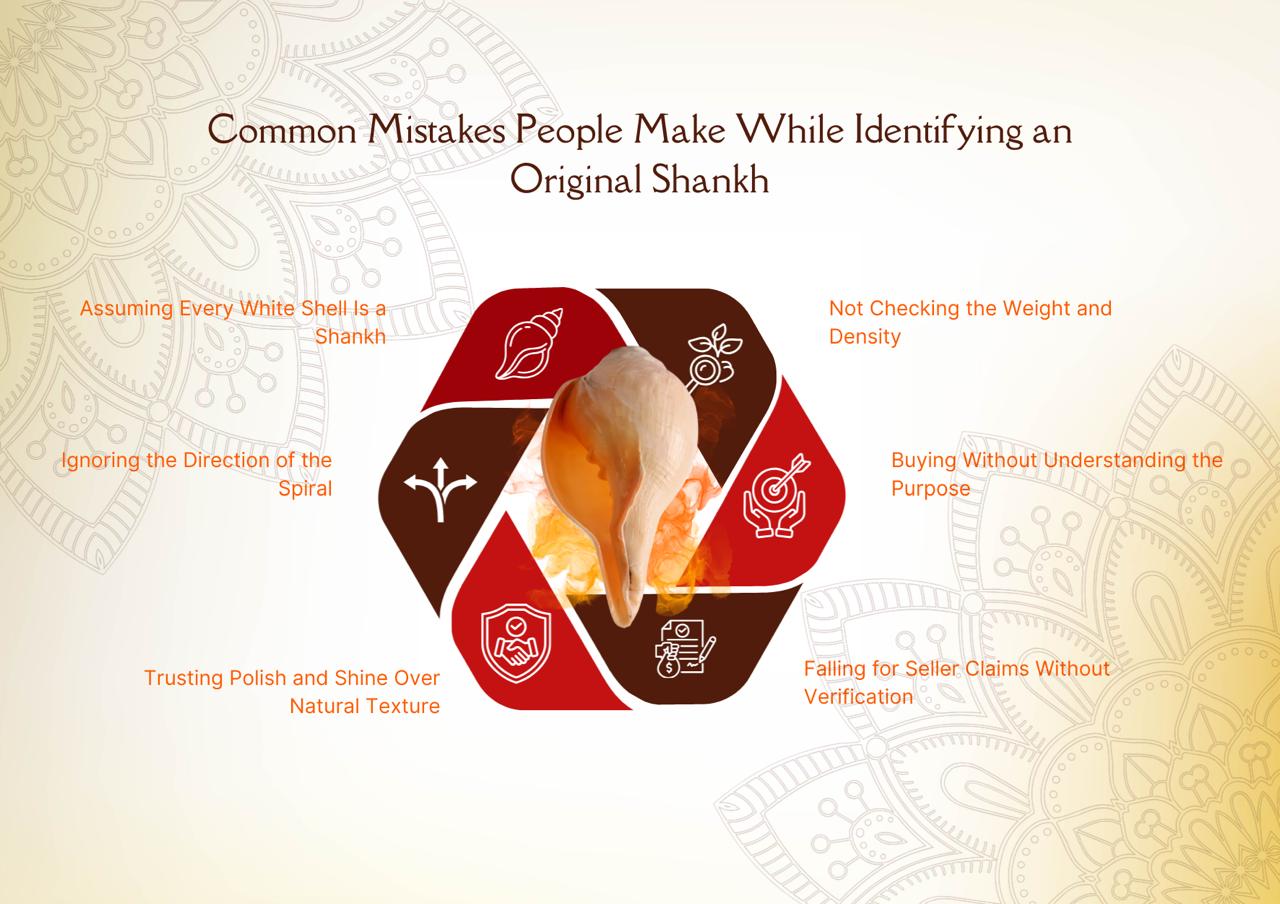
Mistake 1: Assuming Every White Shell Is a Shankh
That’s a very common mistake: believing that any white or spiral-shaped shell is a Shankh. It’s wrong, as not all sea shells are sacred original Shankh, yet many are decorative shells that don’t have any spiritual significance.
The original Shankh naturally has a spiral structure and a dense, solid body. Decorative shells are thinner and lighter, but are meant only for visual appeal. Typically, buying a Shankh solely for its colour isn’t the right way, as it’s an inauthentic or inactive shell.
Mistake 2: Ignoring the Direction of the Spiral
Most people aren’t aware that Shankh’s spiral direction matters. Some are to the left, while others are to the right. Each type has its own purpose and value, with rituals and sacredness. Without knowing the direction of the spiral and its opening, people buy anything, assuming all of it serves the same purpose. That’s just a misconception; some are suited for traditional use, while others are best for household use.
Mistake 3: Trusting Polish and Shine Over Natural Texture
The next most common mistake is to shine with authenticity. Typically, the artificial Shankh, or chemically treated conch shell, has a well-finished, polished look that makes it highly attractive. Precisely, it looks beautiful in appearance, but that excessive shine isn’t natural and hides the originality of the Shankh. The untreated, original Shankh is slightly uneven in surface, with natural ridges and texture. Most of them aren’t pure white but are off-white or a little pale.
Mistake 4: Not Checking the Weight and Density
Weight plays a crucial role in determining whether the Shankh is original. The natural and genuine Shankh will be heavier than artificial or decorative Shankh because of its dense calcium structure. The fake Shankh will be lighter and feel hollow when handled.
Mistake 5: Buying Without Understanding the Purpose
Not all the Shanks have the same use and value. The ideal ones are used for blowing during rituals, while some are meant only for placement, and a few are specifically for holy water offerings. A common mistake is buying any kind of Shankh without knowing its use and purpose. Using an incorrect Shankh doesn’t deliver the intended benefit and goes against traditional guidance.
Mistake 6: Falling for Seller Claims Without Verification
People are easily fooled by sellers and marketers who claim Shanks aren’t original, aren’t rare, or aren’t ancient. Such claims are blindly trusted when religious beliefs are involved, leaving many unaware that they are buying poor, decorative, or artificial conch shells. The original and genuine Shankh doesn’t need any exaggerated stories to prove its value; just its appearance speaks for itself.
Mistake 7: Ignoring Natural Sound Quality
When it’s about a Shankh meant for blowing, sound quality matters. Some conch shells produce weak, distorted sounds, which may be due to internal damage or artificial drilling. People don’t test the sound quality and capability before purchase; they later regret it. Original Shankh produces a deeper, resonant, and quality sound when blown properly.
Mistake 8: Overlooking Cracks and Repairs
Many sellers repair and fill cracks and damage using polish and colouring. So it’s easy to fool buyers, and most of them assume them as well. Natural Shankh is wholly original. Buyers need to be careful while purchasing any conch shell, as damaged or repaired shells aren’t good for spiritual use; they are believed to carry disrupted energies.
Mistake 9: Confusing Rare With Right
Some believe that rarer Shankh types are automatically better. While some are special and should be used sparingly. Choosing the original Shankh depends on the needs, such as for traditional home puja, spiritual intent and proper guidance. This actually defines the cost of Shankh based on its uniqueness.
Conclusion
Identifying the original Shankh isn’t easy, but it requires awareness and respect for its mythological value and beliefs. The mistakes mentioned are due to poor knowledge, visual assumptions, and emotional buying decisions. Therefore, it is important to understand the natural structure, weight, texture, sound, purpose and authenticity before buying the conch shell.
FAQs
- Can decorative shells be used as a Shankh at home?
Decorative shells are primarily for display and usually lack the spiritual qualities associated with an original Shankh.
- Is a heavier Shankh always original?
While weight is an important indicator, it should be checked along with structure, sound, and natural texture for accurate identification.
- Can a cracked Shankh be kept for pooja?
Traditionally, cracked or repaired Shankhs are avoided for rituals because they are believed to disrupt the flow of energy.
- Is it necessary to buy a rare Shankh for spiritual benefits?
No, spiritual effectiveness depends on proper usage and intent, not rarity or price.
- How can a beginner avoid buying a fake Shankh?
Learning basic identification signs, checking physical qualities, and buying from knowledgeable sources can help avoid common mistakes.
Can Women Blow the Conch? Breaking the Age-Old Belief System
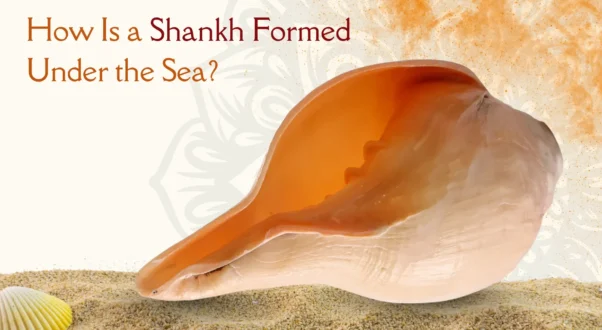
How Is a Shankh Formed Under the Sea? Real Science Behind the Sacred Shell
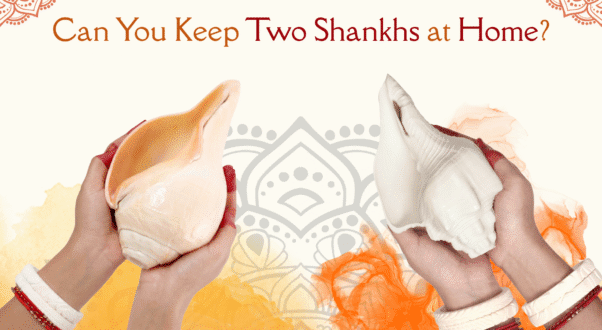
Can You Keep Two Shanks at Home? Vastu Rules Explained