
Introduction
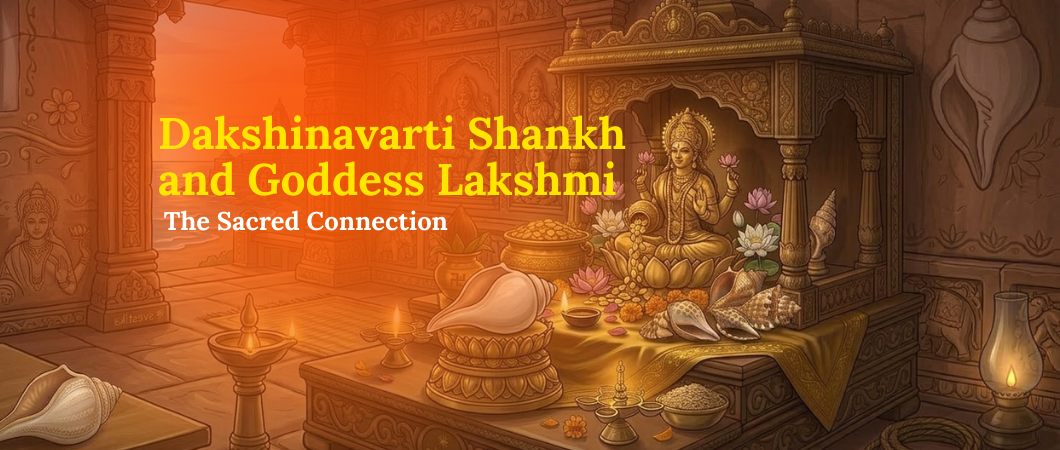
In Hindu mythology, certain objects with sacred symbols are believed to carry positive energy. Among them, Shankh has been recognised as a powerful object. Unlike ordinary conch shells, some rare ones like Dakshinavarti Shankh hold a special place because of their unique formation and association with Goddess Lakshmi, a deity of wealth, prosperity and luck.
For ages, Dakshinavarti Shankh has been worshipped in home puja spaces and temples, not just as an object meant to attract wealth and abundance, but also known for its spiritual stability, peace, and divine energies. The symbolising, in fact, goes far beyond ritual uses, yet it is a spiritual asset that brings prosperity. Let’s dive into the blog to explore the deeper, sacred connection between the Dakshinavarti Shankh and Goddess Lakshmi, and the auspiciousness of this sacred conch shell in Hindu traditions.
What Is Dakshinavarti Shankh?
Among the rarest conch shells–Dakshinavarti Shankh holds in a sacred space, open towards the right side. Its rightward spiral makes it a special and spiritually potent object that attracts luck and wealth. Typically, most of the Shankhs have left. The Dakshinavarti Shankh is a highly uncommon conch shell.
Term–Dakshinavarti itself means right-facing, which is linked with auspiciousness, discipline and divinity. Its rarity and spiritual alignment are compared to sacred symbols such as the Sudarshan Chakra and the lotus.
Association of Dakshinavarti Shankh with Goddess Lakshmi
Symbol of Wealth and Prosperity
Dakshinavarti Shankh is closely linked with Goddess Lakshmi, the deity of purity, wealth and prosperity. Many scriptures and temples believe that Goddess Lakshmi resides forever in the Dakshinavarti Shankh, so they inherit abundance and divinity when worshipped with devotion. People who keep the Dakshinavarti Shankh at home attract success and invite steady financial growth rather than sudden gains. It symbolises prosperity and wealth.
Representation of the Divine Ocean
Goddess Lakshmi emerged from the ocean during the churning of the cosmic sea, and as Shankh originate from the ocean, they naturally carry the deity’s divine energies. This mythological connection makes Dakshinavarti Shankh a true and rare reminder of abundance, balance, and prosperity.
Spiritual Importance of Dakshinavarti Shankh
Attracting Positive Energy
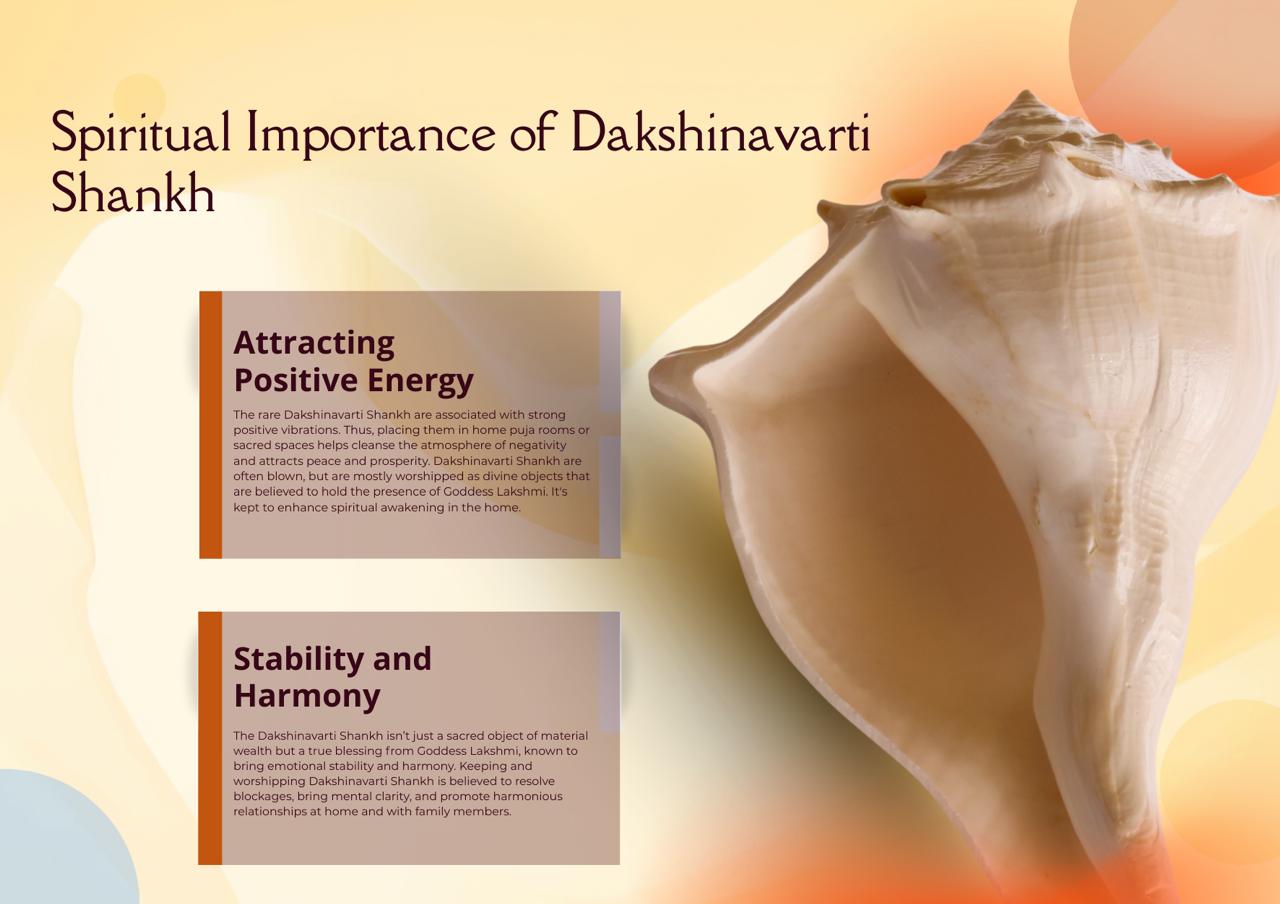
The rare Dakshinavarti Shankh are associated with strong positive vibrations. Thus, placing them in home puja rooms or sacred spaces helps cleanse the atmosphere of negativity and attracts peace and prosperity. Dakshinavarti Shankh are often blown, but are mostly worshipped as divine objects that are believed to hold the presence of Goddess Lakshmi. It’s kept to enhance spiritual awakening in the home.
Stability and Harmony
The Dakshinavarti Shankh isn’t just a sacred object of material wealth but a true blessing from Goddess Lakshmi, known to bring emotional stability and harmony. Keeping and worshipping Dakshinavarti Shankh is believed to resolve blockages, bring mental clarity, and promote harmonious relationships at home and with family members.
Dakshinavarti Shankh in Daily Worship
Placement in the Home
The Dakshinavarti Shankh is mostly placed and worshipped in home puja spaces—ideally facing east or north. It is kept on a clean cloth and treated with great respect. For people, this rare conch shell isn’t only a sacred object but is also kept carefully, with cleanliness, pure intention, and discipline.
Ritual Significance
The Dakshinavarti Shankh is not blown but kept and worshipped during Lakshmi puja, festivals like Diwali, on Fridays, and on any special occasions. It’s gently washed, adorned with pleasing flowers and offered incense and diyas. Rather than focusing on elaborate rituals, emphasis is placed on consistency and devotion.
Difference Between Dakshinavarti Shankh and Ordinary Shankh
Traditionally, the ordinary Shankh can be blown during daily puja rituals or to purify the environment, but the Dakshinavarti Shankh serves a special purpose. The classification is below;
Ordinary Shankh:
- Used for sound purification
- Commonly found
- Associated with ritual cleansing
Dakshinavarti Shankh:
- Rare and sacred
- Worshipped as a divine object
- Associated with Goddess Lakshmi and prosperity
Why Dakshinavarti Shankh Is Considered Rare and Powerful?
The Dakshinavarti Shankh is rare because it enhances spiritual value. The natural curves or rightward spirals make them powerful and purest among all Shankh types, as believed to attract cosmic energies and luck. The spirals are natural and aligned with solar energy, discipline and structured growth. It’s not used for blowing during puja rituals, but it’s worshipped to attract long-term success and stability. Because it is rare, it is also believed to respond strongly to intention and devotion. When sincerely worshipped, it is said to amplify positive outcomes in both the material and spiritual realms.
Common Beliefs and Misconceptions
Most people believe that the Dakshinavarti Shankh bring wealth, but traditional wisdom emphasises its powerful energies and abundance. If treated with respect and discipline, attract luck, wealth and prosperity. The Dakshinavarti Shankh is meant to be kept as a sacred object associated with Goddess Lakshmi rather than for sound production.
Conclusion
Among conch shell classifications, one of the rarest is the Dakshinavarti Shankh, which symbolises the Goddess Lakshmi. It represents the deity’s presence as a blessing that attracts prosperity, purity, and peace. In homes and temples, the Dakshinavarti Shankh is kept for worship as a sacred object, not casually blown during puja rituals and occasions. When worshipped with discipline, the Dakshinavarti Shankh brings steady growth, stability in life and mental clarity. The sacred connection between Goddess Lakshmi and the Dakshinavarti Shankh continues to inspire devotion across generations.
FAQs
1. Can Dakshinavarti Shankh be kept at home?
Yes, it can be kept at home if placed respectfully in the puja area and worshipped with cleanliness and devotion.
2. Is Dakshinavarti Shankh meant to be blown?
No, it is generally not blown. It is worshipped as a sacred object associated with Goddess Lakshmi.
3. Who should worship Dakshinavarti Shankh?
Anyone seeking spiritual growth, stability, and prosperity can worship it with sincere intention.
4. Is Dakshinavarti Shankh suitable for daily worship?
Yes, daily worship is encouraged, even if it is simple and minimal.
5. Does Dakshinavarti Shankh guarantee wealth?
It is believed to support positive growth and stability, but true benefits depend on devotion, discipline, and ethical living.
Can Women Blow the Conch? Breaking the Age-Old Belief System
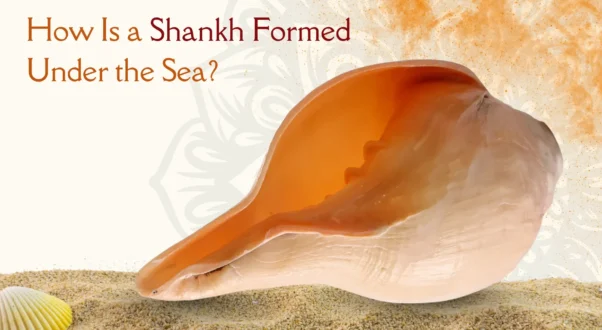
How Is a Shankh Formed Under the Sea? Real Science Behind the Sacred Shell
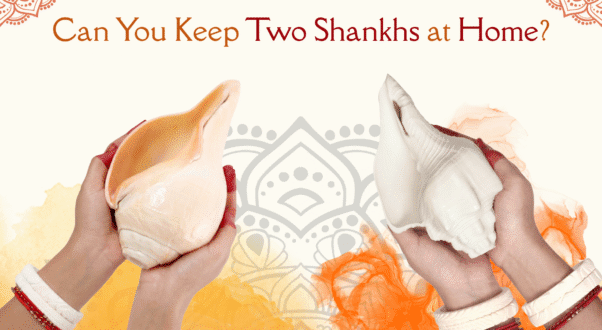
Can You Keep Two Shanks at Home? Vastu Rules Explained