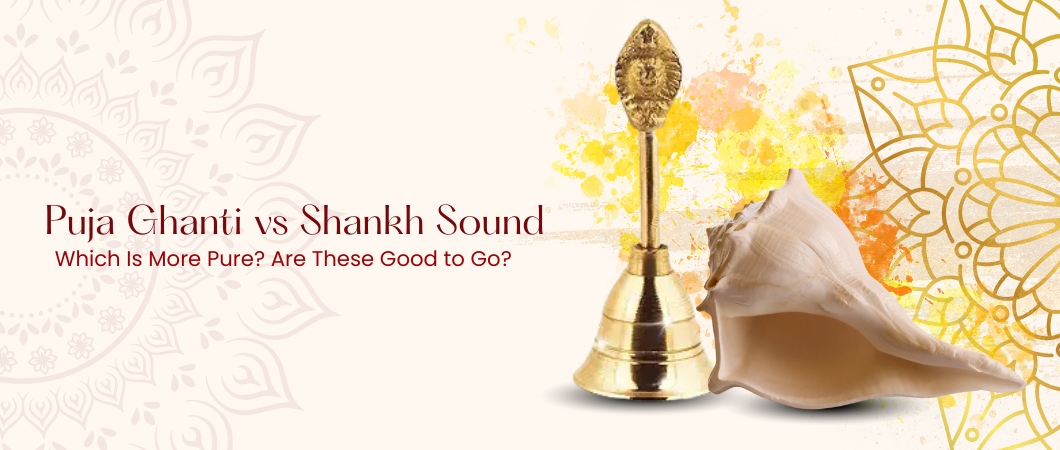

In Hindu worship and spiritual practices, sound plays an important role. Whether it’s chanting of mantras, ringing bells, or blowing of the Shankh, everything is believed to create vibrations and purify the surroundings. The sound is linked with divinity and positivity.
Among all sacred sounds, Puja Ghanti and the Shankh are the two most commonly used in homes and temples. Now the question is: which is the purest, and if both are equally good for daily worship, given their great spirituality and importance?
Let’s clear the way with a precise answer. First, we need to understand the meanings, purposes, vibrational qualities, and spiritual associations of both to clear all myths.
Introduction: Why Purity of Sound Matters in Puja
According to Hindu mythological belief, the universe has its purest form of cosmic sound: OM. That symbolizes energy in every motion, even in space, that awakens the mind, purifies the environment, and attracts divinity.
Both puja ghanta and the Shankh are sacred objects with a deep spiritual connection to their origins, nature, and roles in different contexts. Understanding the difference is important to make a precise choice of sound to attract purity and positivity.
Understanding the Puja Ghanti (Bell)
What Is a Puja Ghanti?
The ringing bell, or Puja Ghanti, is a metal bell usually made of brass, bronze, or a mix of metals. It’s rung while;
- Daily puja and aarti rituals at home or temples.
- Invocation of deities.
- Puja Ghanti is usually conducted in a rhythmic format, with prayers and mantra chanting.
Spiritual Meaning of Puja Ghanti Sound
The sound of Puja Ghanti is linked to
- Deity awakening.
- Alert the soul and body to keep focused on mantra chanting and puja rituals.
- Eliminate negativity in thoughts and the environment.
- Makes the surroundings sacredly positive and the atmosphere purest.
Understanding the Shankh (Conch Shell)
What Is a Shankh?
The natural conch shell, Shankh, is formed beneath the ocean and is closely associated with Lord Vishnu, one of the most sacred objects in Hindu mythology.
It is blown:
- At the beginning or end of puja
- During auspicious occasions
- In temples
- During spiritual cleansing rituals
Spiritual Meaning of Shankh Sound
Shankh sound is believed to;
- Represent the cosmic sound Om
- Purify the environment instantly
- Destroy harmful vibrations
- Invoke divine protection
Nature of Shankh Sound
Typically the Shankh sound resembles the cosmic vibrations and sound associated with Om. It is;
- Produced through breath (prana)
- Amplifies natural sound through a sacred object
- Creates a deep, expansive vibration
- Not rhythmic but powerful and cleansing
Comparing Puja Ghanti and Shankh Sound
Comparing both Puja Ghanti vs Shankh sound depends on the preferences and spiritual qualities. As both of them share the purity and sacredness behind them.
Origin of Sound
- Ghanti: It’s a man-made instrument.
- Shankh: The conch shell is a natural object formed in the ocean.
Connection to Om
- The sound of the Ghanti bell helps focus the mind, yet doesn’t replace the Om sound.
- The Shankh sound resembles the cosmic vibration of the universe, Om.
Method of Sound Production
The sound generated by both as;
- Puja Ghanti is struck by hand.
- Blowing the Shankh requires breath control and practice.
Purpose in Rituals
- Puja Ghanti maintains the rhythm and focus.
- The blowing of the Shankh purifies and energizes the atmosphere, making it conducive to invocation.
Which Sound Is Spiritually Purest?
Spirituality and the traditional blowing of the Shankh is purest because of;
- Its natural origin
- Its connection to Om
- Its association with Lord Vishnu
- Its ability to cleanse energy instantly
Although Puja Ghanti isn’t impure, it is about intention, usage, and respect.
Are Both Puja Ghanti and Shankh Sound Good to Go?
Precisely, both have their own significance in Hindu rituals and ideally can be used together. Both are sacred puja instruments that help in maintaining balance and focus during worship or puja rituals. In fact, they are known to create positivity and energetic purification while keeping mind, body, and space balanced.
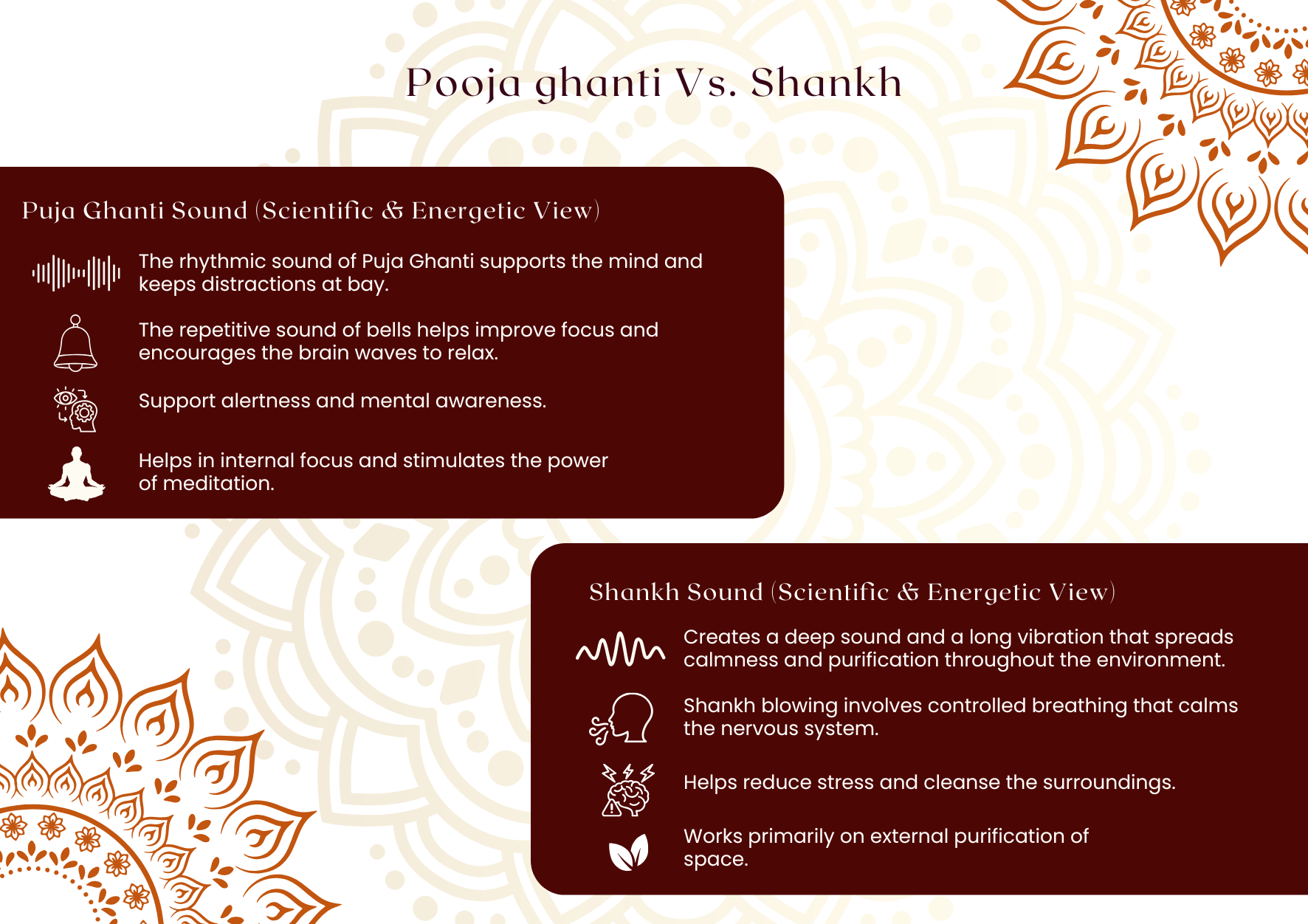
Puja Ghanti Sound (Scientific & Energetic View)
- The rhythmic sound of Puja Ghanti supports the mind and keeps distractions at bay.
- The repetitive sound of bells helps improve focus and encourages the brain waves to relax.
- Support alertness and mental awareness.
- Helps in internal focus and stimulates the power of meditation.
Shankh Sound (Scientific & Energetic View)
- Creates a deep sound and a long vibration that spreads calmness and purification throughout the environment.
- Shankh blowing involves controlled breathing that calms the nervous system.
- Helps reduce stress and cleanse the surroundings.
- Works primarily on external purification of space.
Conclusion
The debate over the sacredness of Puja Ghanti vs. Shankh sound is endless because it is not about right or wrong choices. Understanding the unique roles and energies is important. At the same time, the blowing of Shankh is traditionally considered purest with the cosmic sound of space-OM.
However, the puja ghanta holds equal significance, guiding the mind and balancing devotional focus. Both of the sacred instruments are known to keep the atmosphere peaceful and spiritually charged. In the end, the purest sound is the one that arises from sincere devotion.
FAQs
1. Can I perform puja without a Shankh?
Yes. Puja can be performed without a Shankh. Faith and intention matter more than ritual objects.
2. Is the Shankh sound suitable for daily home worship?
Yes, the Shankh sound is suitable for daily use if blown respectfully and at appropriate times.
3. Does the material of the puja Ghanti affect its purity?
Traditional metals like brass or bronze are preferred, but purity ultimately depends on the intended use and proper care.

Can Women Blow the Conch? Breaking the Age-Old Belief System

How Is a Shankh Formed Under the Sea? Real Science Behind the Sacred Shell
Can You Keep Two Shanks at Home? Vastu Rules Explained