
Traditionally in India, the conch shell has been an important part for ages. From the sound marks in the temple prayers and spiritual rituals, it purifies spaces and symbolizes the divinity. For generations, people have been influenced by the blowing of the Shankh that brings physical strength, mental clarity and spiritual awakening. Apart from these, it’s also considered a dedicated element in the cultural foundation. Yet today in the era of modern science, the blowing of the Shankh has been proven with an endless list of health benefits. Surprisingly, the findings show that practicing natural Shankh blowing not only creates cosmic sound but also improves health, like lung capacity, promotes respiratory strength and gives mental clarity.
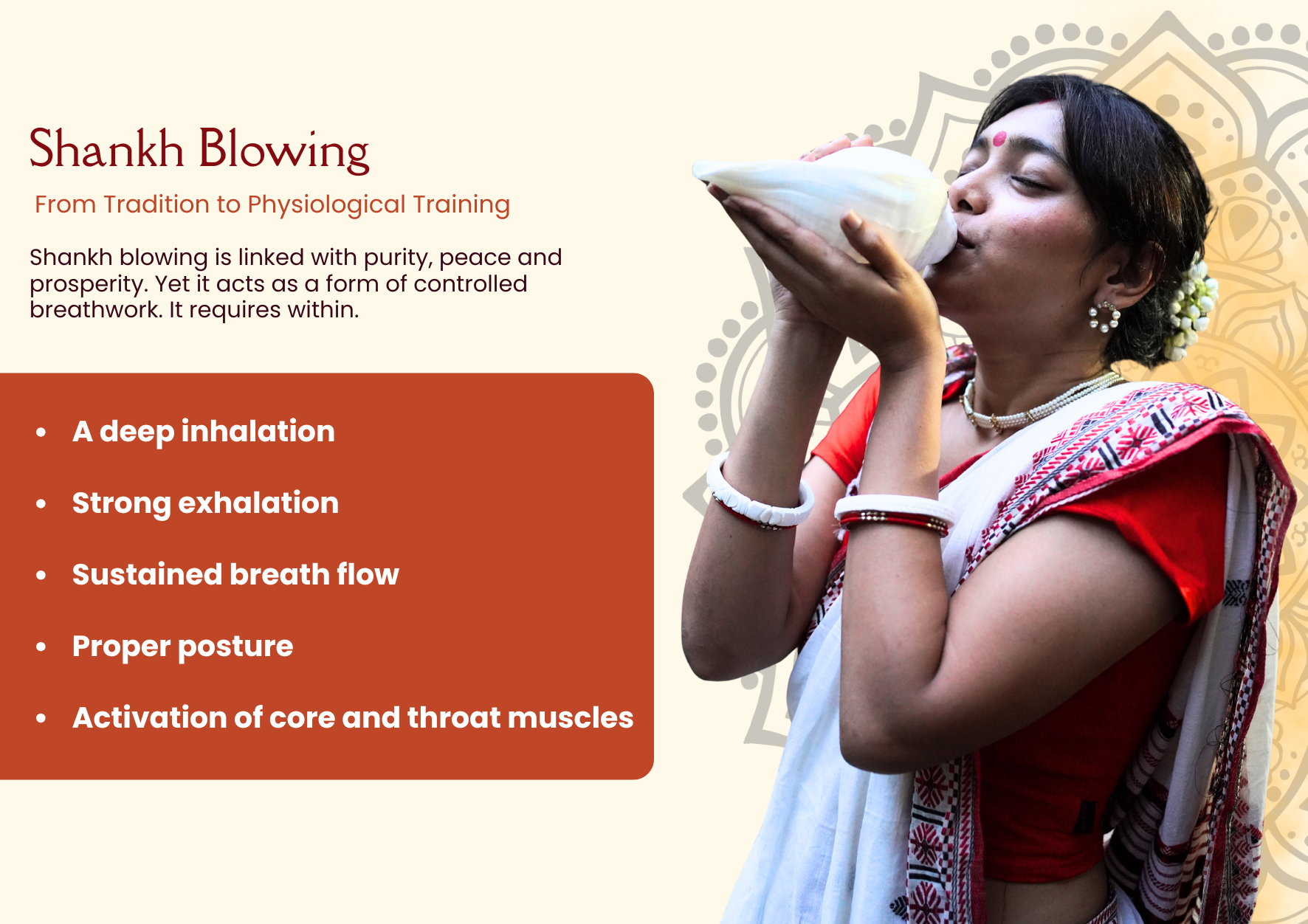
Shankh Blowing: From Tradition to Physiological Training
Shankh blowing is linked with purity, peace and prosperity. Yet it acts as a form of controlled breathwork. It requires within.
- A deep inhalation
- Strong exhalation
- Sustained breath flow
- Proper posture
- Activation of core and throat muscles
All the mentioned components do help in respiratory exercise, such as yogic pranayama and pulmonary rehabilitation.
How Shankh Blowing Engages the Respiratory System
Shankh blowing looks to be the simplest, but still it’s not, as air needs to pass through the hollow pipe. The conch shell has a natural spiral structure that creates resistance and helps in producing long, steady and deep sound. This supports the respiratory muscles with increased lung expansion and strengthens them. Here’s what happens physiologically:
Deep Inhalation Expands Lung Chambers
Before you start blowing the Shankh, ensure you can take full and deep breaths. This helps in expanding the alveoli, which improves the lungs’ intake capacity. The regular practice helps the lungs to hold more air for longer.
Strong Exhalation Improves Breathing Efficiency
The forceful exhalation helps in producing the conch shell sound that serves as resistance training for the respiratory system. So when you push air strongly against resistance, the diaphragm and intercostal muscle improves and make the body efficient in breathability.
Longer Exhalation Improves Stamina
Typically, blowing of the Shankh needs steady breathing and control of it. If you are a beginner, then definitely, with time, it increases the respiratory endurance and regulates breath control.
Strengthens Core and Throat Muscles
Shankh blowing generates pressure which engages abdominal muscles, rib cage muscles and throat. It helps in increasing the breathing stability and vocal clarity.
Enhances Oxygen Flow
Better lung function helps in improving the oxygen supply to the whole body. It even supports brain function, improves metabolism and increases physical energy levels.
The Science Behind Lung Expansion and Breath Control
Today, there are modern studies that have proven the benefits of controlled breathing, like pranayama, wind instrument training and respiratory therapy. These are the best breath-based exercises that give ample benefits for lung health and improved respiratory system functioning. However, still Shankh blowing is limited within breathing patterns like;
- Diaphragmatic breathing
- Pursed-lip breathing
- Wind instrument practice
- Respiratory physiotherapy
These practices are known to help improve lung function and lung volume.
Scientific Benefits Observed in Similar Breathing Exercises
- Improves the vital capacity of the lungs to hold air.
- Increase tidal volume per breath.
- Support the diaphragm and respiratory muscles.
- Good for better airway clearance.
- Improved oxygenation of the blood
- Reduced stress and improved heart rate variability
Shankh Blowing and Respiratory Disorders
Yet it’s not a medical cure, still regular Shankh blowing practice supports individuals with mild respiratory issues like;
- Poor breathing patterns.
- Weak lung strength and capacity.
- Mild asthma symptoms.
- Anxiety-induced breathlessness
- Post-illness lung weakness
The Role of Vibrations in Respiratory Health
Beyond the breathwork, Shankh blowing plays a significant role in overall health and respiratory wellness. The conch shell produces low-frequency vibrations that travel through the chest region. These vibrations include;
- Mild stimulation in lung tissues.
- Improves circulation within the respiratory pathway.
- Relaxation of the throat and chest muscles.
- Lowers the risk of mucus congestion.
Mental Health Benefits of Shankh Blowing
Typically, the mind and breath share a deeper link. So when you learn to control your breath, your mind becomes calmer. This is what Shankh blowing helps individuals within.
- Slows down breathing rhythm
- Activates the parasympathetic nervous system
- Reduces stress hormones
- Promotes mental clarity and focus
The deeper and longer humming sound gives a calming effect. It even supports mental clarity, reduces anxiety and supports emotional well-being.
Shankh Blowing as a Holistic Exercise
Shankh blowing practice combines multiple elements such as;
- Breathwork
- Sound healing
- Postural alignment
- Core engagement
- Focused attention
- Energetic stimulation
How to Practice Shankh Blowing Safely
If you are a beginner, then you don’t need to rush and start slow. Overexertion helps in lightheadedness. This is a simple approach which ensures one thing;
- You may need to sit or stand with a straight spine.
- Sit or stand with a straight spine.
- Take a deep breath using the diaphragm.
- Seal your mouth around the Shankh opening.
- Exhale steadily to produce a continuous sound.
- Rest between attempts to avoid strain.
- Practice for 5–10 minutes daily.
- Within a few weeks, improvements in breath strength and lung control become noticeable.
Final Thoughts
Not only the cultural value and spiritual significance, but also the blowing of the conch shell helps as a breathing exercise. It not only strengthens respiratory muscles but also expands the lung capacity. The Shankh blowing rituals even support breath control and emotional wellness. It’s a deep-rooted practice from ancient traditions that today is a natural form of pulmonary training.
FAQs
1. Can blowing the Shankh really improve lung capacity?
Yes. Because it requires deep inhalation and forceful, sustained exhalation, the practice naturally strengthens respiratory muscles and increases lung volume over time.
2. Is Shankh blowing safe for people with asthma?
Mild asthma patients may benefit from improved breath control, but those with severe asthma should consult a professional before practicing to avoid strain.
3. How long does it take to notice improvements in breathing?
With regular practice for 2–3 weeks, many people observe better stamina, smoother breathing, and a stronger diaphragm. The results improve gradually with consistency.
Can Women Blow the Conch? Breaking the Age-Old Belief System
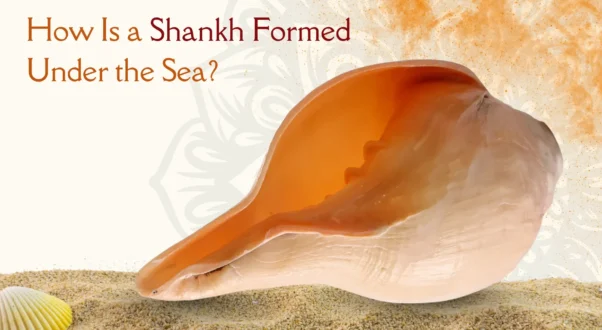
How Is a Shankh Formed Under the Sea? Real Science Behind the Sacred Shell
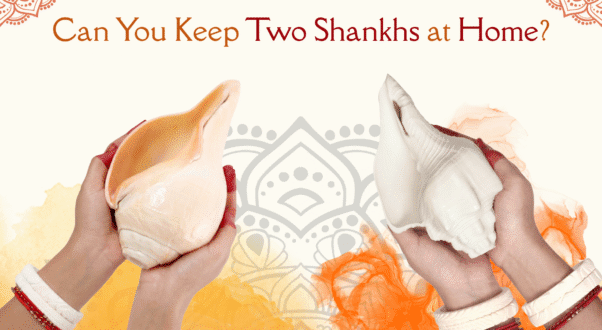
Can You Keep Two Shanks at Home? Vastu Rules Explained