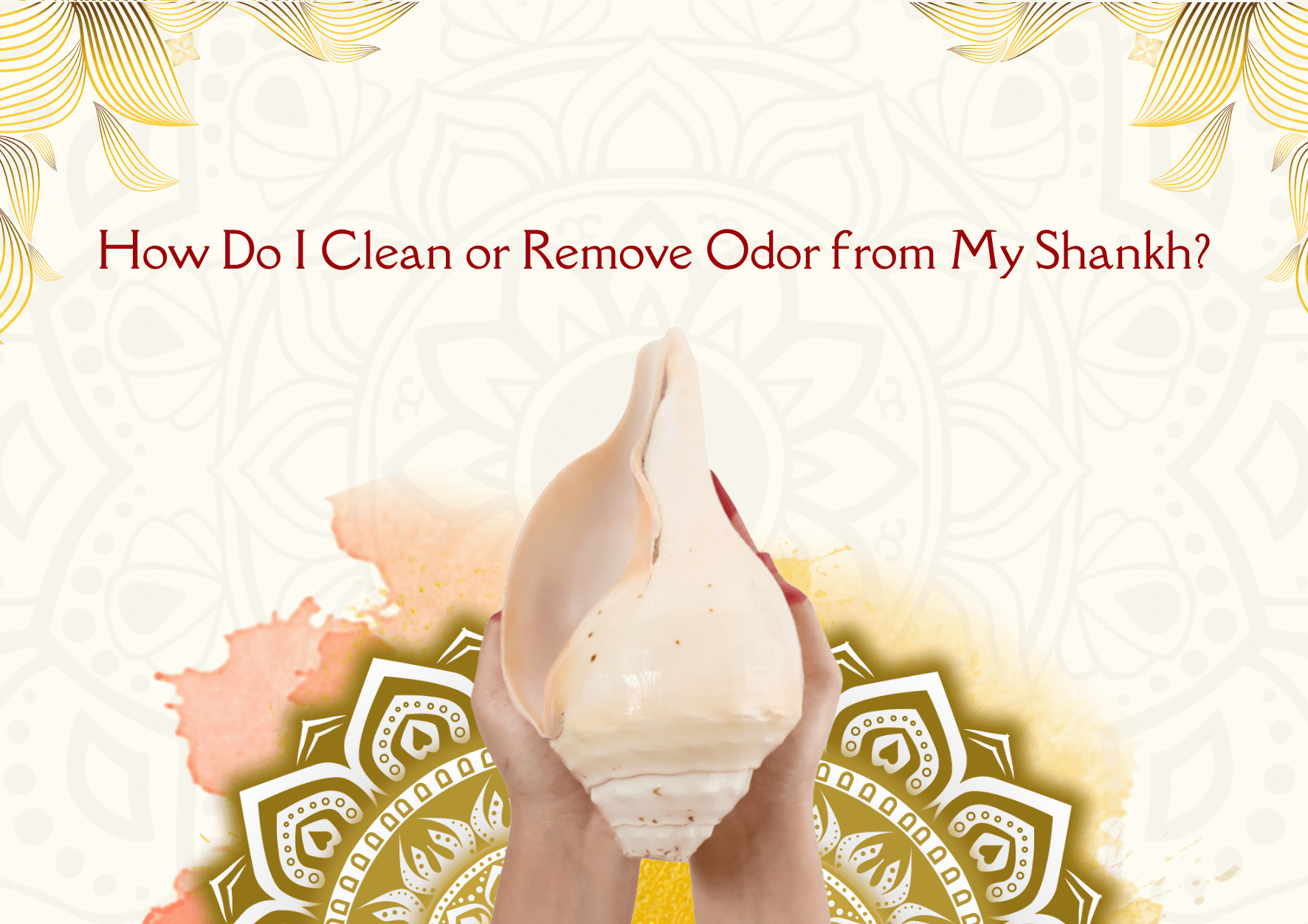

Shankh is also known as the conch shell—it’s more than a decorative and religious item. In Hinduism, the Original shankh signifies the sacred symbol of purity, prosperity, and positivity.
From blowing shankh in daily puja or performing sacred rituals, to storing water or keeping it to attract wealth and auspiciousness, the Sea shankh has a lot of benefits in Indian mythological beliefs. It’s even considered the way to preserve beauty, energy, and luck.
Do you know that the real and natural shankh, over time, develops a change in colour and odour? That all happens when it is not clean and maintained properly, resulting in prolonged storage, exposure to moisture, and accumulation of residues.
The proper care will help you keep it pristine without damaging the natural shine and structure. Let’s find that in the blog below.
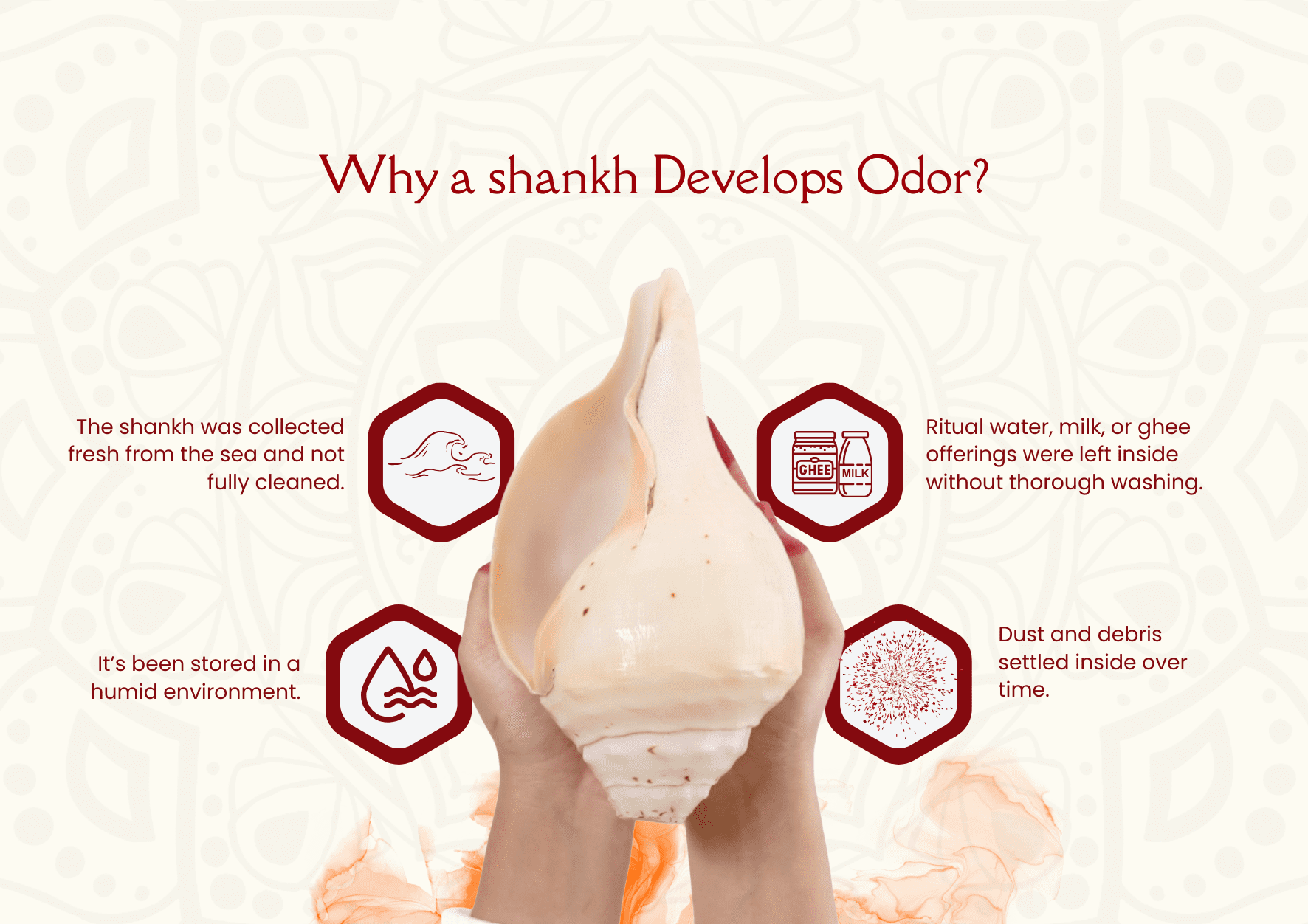
Why a shankh Develops Odor
Any Original shankh is a natural conch shell, which is organic in material. The odour mainly develops because of the accumulation of tiny particles, moisture, or remnants of the sea life in its crevices. All these factors, over time, cause an unpleasant smell and a change in colour. It’s all happened, especially if;
- The shankh was collected fresh from the sea and not fully cleaned.
- It’s been stored in a humid environment.
- Ritual water, milk, or ghee offerings were left inside without thorough washing.
- Dust and debris settled inside over time.
Step-by-Step Guide to Cleaning Your shankh
Cleaning a shankh isn’t linked only with removing dirt—it’s even about doing it without impacting the natural beauty, colour, and spiritual value of the conch shell. The traditional yet practical approach to it.
Initial Rinse
You may find different Types of shankh—with specific spiral shapes, textures, and significances—but all need deep cleansing. Rinsing the shankh initially is for all, and it’s done with running lukewarm water to remove dust or loose debris. shankh needs to be avoided when cleaned with hot water, as it may cause micro-cracks in delicate shells.
Soak in Saltwater
Create a saltwater solution—use rock salt in warm or lukewarm water. Now, soak the shankh in the solution for some time; a few hours to loosen the stuck debris and particles. It even neutralizes odours. Rock salt is preferred because it has a milder effect on conch shells compared to chemical cleansers.
Use Lemon and Baking Soda
If still odours persist, you can use a natural paste made of lemon juice and baking soda. It’s a natural combination of deodorizers that gives conch shells gentle cleaning, without damaging it. However, you need to rinse thoroughly afterwards.
Natural Sun Drying
After performing all cleaning steps, place the Sea shankh in morning sunlight to dry completely. Avoid intense midday sun for long hours, as UV exposure can cause fading or change the colour of the conch shell. The sunlight benefits naturally, as it kills bacteria and removes residual smell in the conch shell.
Occasional Oil Treatment
If you are using a shankh for blowing, that often gentle rubbing of coconut oil on its outer surface keeps it clean and maintained. It remains glossy and protected.
Different Types of shankh and Their Cleaning Needs
Not all shankhs are the same, and their cleaning requirements may vary:
- Dakshinavarti shankh – Its spiral opens at the right and is considered to be rare and auspicious. This conch shell needs to be cared for to maintain its natural shine. The shankh is never cleaned with abrasive cleansers.
- Vamavarti shankh – This Sea shankh spiral opens at the lift and remains the most common type of conch shell used in homes and temples for daily rituals. It can be regularly cleaned with a gentle saltwater mix, keeping its natural shine preserved.
- Ganesha shankh – It shares a unique structure, resembling Lord Ganesha. The curves need to be carefully yet gently brushed to remove dust or debris.
- Gaumukhi shankh – The conch shell shaped like a cow’s face, and mostly used in abhishek (sacred ritual bathing). It needs cleaning after every use to prevent milk or water odour inside its spiral structure.
How to Identify an Original shankh
The conch shells are expensive, and the market has both artificial and Original shankhs. If you plan to buy it for religious or medicinal use, it’s crucial to verify that the original conch shell is authentic.
- Texture: Typically, genuine shankhs are cool and tough and have natural ridges. However, artificial ones will feel lighter and smoother, due to resin or ceramic material.
- Sound Test: Blowing of the shankh produces a deep and resonant sound—its original. The artificial ones will sound flat or muffled.
- Weight: Natural shells are heavier than synthetic imitations.
- Appearance: Original shankhs may have slight imperfections or natural colour variations, unlike uniform-colored fakes.
- Appearance: Natural shankh would have uneven surface with roughness and visible marks. In fact it would be heavy in weight yet artificial or repaired shankh would have a smoother and plain surface with lightness in weight.
shankh Price Factors
The shankh price depends on several factors:
- Type of shankh: Rare types like Dakshinavarti or large Sea shankhs are more expensive.
- Size and Weight: Bigger and heavier shells often cost more.
- Condition: A polished, uncracked, and clean shankh fetches a higher price.
- Source: Authentic conchs sourced sustainably from the sea have a higher value than mass-produced ones.
A simple, small Vamavarti shankh might cost just a few hundred rupees, while a large, flawless Dakshinavarti shankh could run into thousands.
The Final Verdict
Having the Sea shankh—whether it’s a Dakshinavarti, Vamavarti, ganesha shankh- is all about the beauty of nature, religious beliefs, and more. From the symbol of its divine energy and inviting luck and prosperity, caring plays an imperative role in preserving both its physical form and spiritual essence.
The following natural cleaning methods help in the deep removal of odours and keep the shankh shining. It remains a cherished part of rituals for years, keeping the Original shankh well-maintained and restored.
FAQs
1. Can I use soap to clean my shankh?
It’s best to avoid strong soaps or detergents. Use mild natural agents like lemon juice, baking soda, or saltwater to preserve the shell’s natural structure.
2. How often should I clean my shankh?
If you use it daily in rituals, clean it at least once a week. For occasional use, a monthly cleaning is sufficient.
3. Does cleaning affect the spiritual energy of the shankh?
On the contrary, regular cleaning is believed to maintain the positive vibrations and purity associated with the shankh in spiritual practices.

Can Women Blow the Conch? Breaking the Age-Old Belief System
How Is a Shankh Formed Under the Sea? Real Science Behind the Sacred Shell
Can You Keep Two Shanks at Home? Vastu Rules Explained